
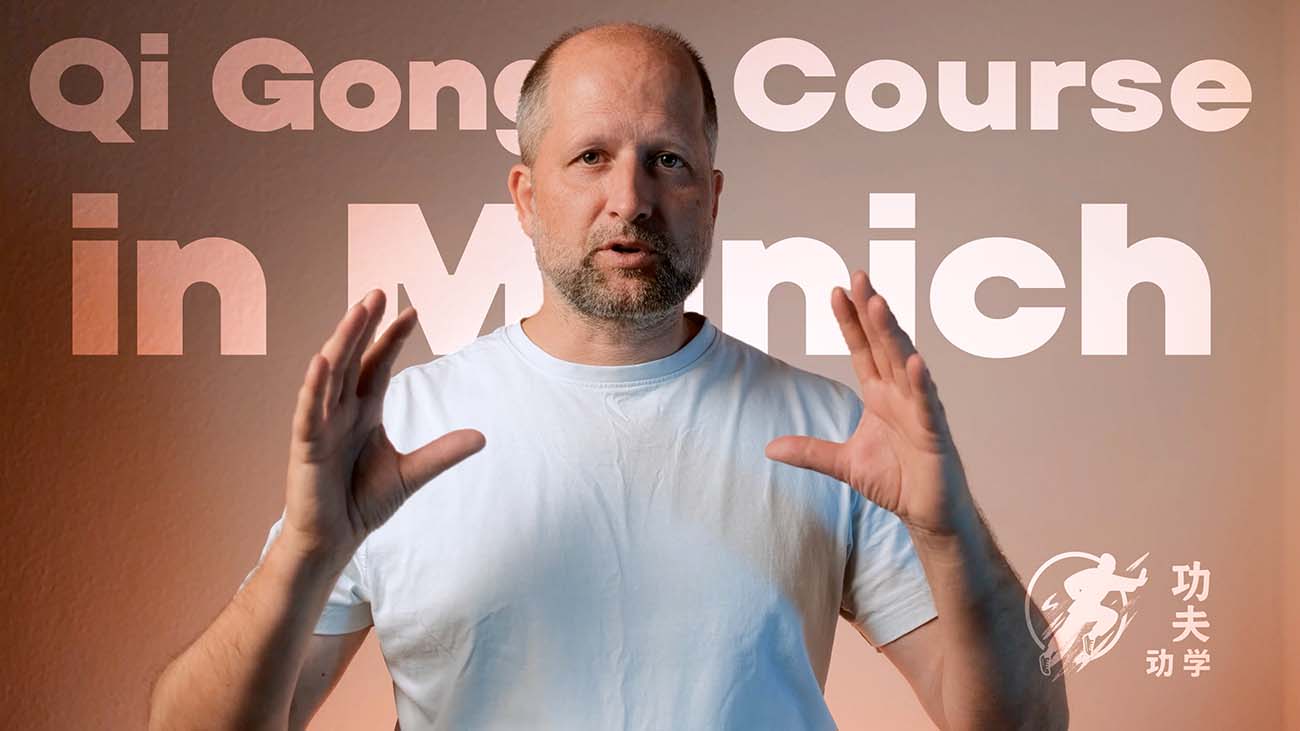
It depends on your goal. Qi Gong is not a technique you complete in a few weeks, but a practice that deepens over time. In our Munich in-person course you steadily develop posture, breathing and inner awareness at your own pace.
What makes this practice distinctive
Qi Gong has its own training language: Qi describes the experience of breath, tension, direction and inner continuity. Tong describes unobstructed movement. We explore these ideas through posture, slow forms and direct corrections.
Christian teaches the exercises so that traditional images and concrete movement come together. You learn more than an outer form: you explore how breathing, attention and structure interact.
Understanding tradition through movement
Concepts such as Qi, Tong and meridians come from traditional Chinese models. In class they guide attention and movement quality; they are not diagnoses or promises of a medical effect.
Force less, connect more – breathing, attention and movement working together.
What you'll learn
Every session combines the central aspects of Qi Gong and Wuji Quan – direct guidance, individual corrections and the energy of the group help you truly feel and internalise the exercises.
氣
Perceive Qi & Connect Movement
Learn to perceive breathing, posture and movement as one connected quality. In the traditional vocabulary of Qi Gong, this inner continuity is described by the concept of Qi.
靜
Calm in Motion
In the calm atmosphere of our training room you practise noticing unnecessary tension and moving without haste. The weekly routine gives this focused practice a regular place in everyday life.
習
Nei Gong & Traditional Models
You encounter traditional concepts such as Nei Gong and meridians as part of the Chinese movement arts. The exercises direct attention to breath, posture and subtle coordination, without medical diagnosis or treatment.
Further key aspects in group training
- Slow, flowing sequences with controlled weight shifts
- Attention and focus through precise, repeated practice
- Posture and balance with direct personal corrections
- Nei Gong: exploring inner perception and traditional training vocabulary in practice
Who is this course for?
- Friends of slow movement: People in and around Munich looking for a focused weekly practice.
- People with a busy schedule: Anyone who wants to practise more slowly and create a regular counterpoint.
- Curious about Chinese traditions: Anyone who wants to explore the cultural background of Qi Gong and Wuji Quan in a motivating group.
- People who value personal instruction: Direct feedback, individual corrections and a fixed weekly routine rather than an anonymous online course.
Tip: As a complement I also offer Inner Kung Fu & Wuzu Quan – the course runs immediately after (Wednesdays 7:15–8:15 pm) and deepens the principles of Qi Gong in the context of martial art.
Course contents in detail
Our in-person course is a flowing, weekly process based on physical experience and direct exchange.
Qi Gong foundations – sensing inner work
Every session begins with exercises that connect posture, breathing and attention. You learn the fundamental principles through direct demonstration and individual correction – no theory without practice.
Wuji Quan – power from emptiness
A central component is the collective learning of the 12 Wuji Qi Gong forms. Christian guides you through the movements and explains their inner logic so that you can understand the connections directly in your practice.
Nei Gong – inner practice
Guided meditations and special exercises direct your attention to breathing, posture and movement quality. Traditional concepts such as Qi and meridians are explained without using them as medical diagnoses.
Integration & exchange
Every session leaves room for your questions. You receive concrete tips on how to integrate the principles of the course meaningfully into your own practice.
Qi Gong lives beyond the dojo
Qi Gong isn't a studio discipline — it's a daily practice, outdoors, alone, in connection with space, breath and nature. Christian in his own practice by the lake.
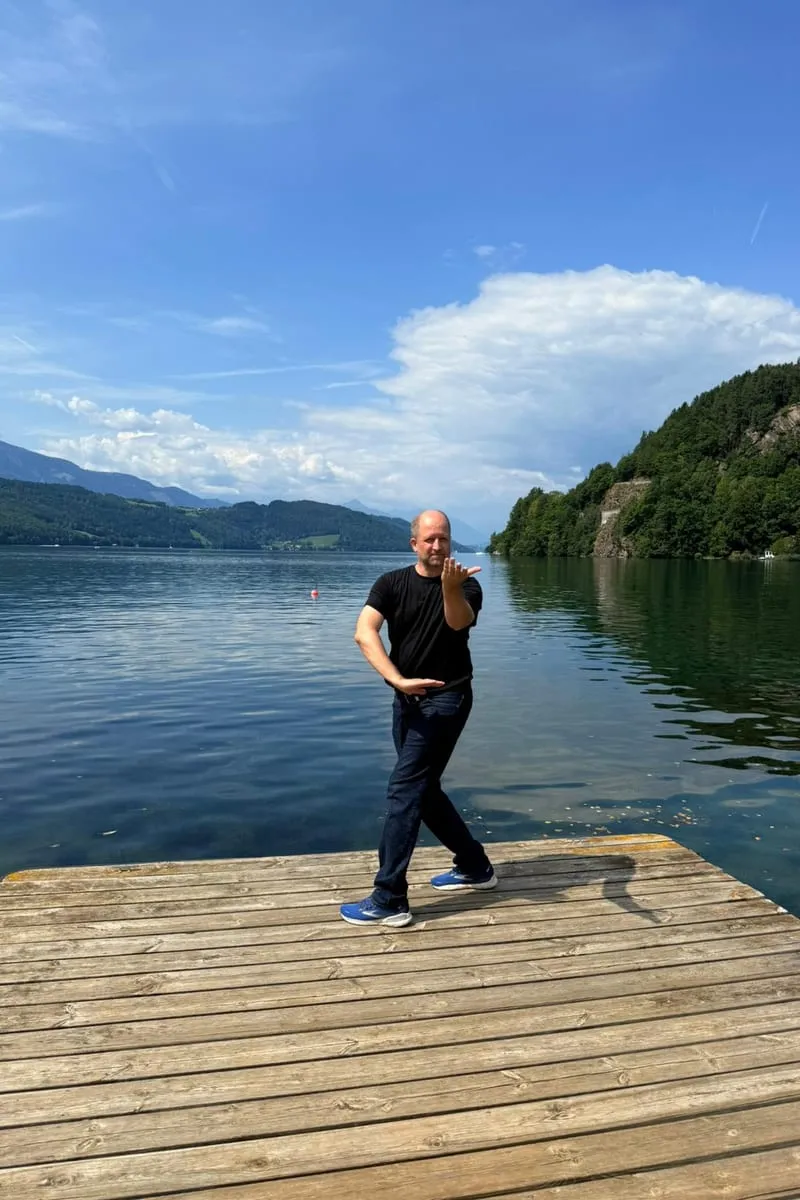
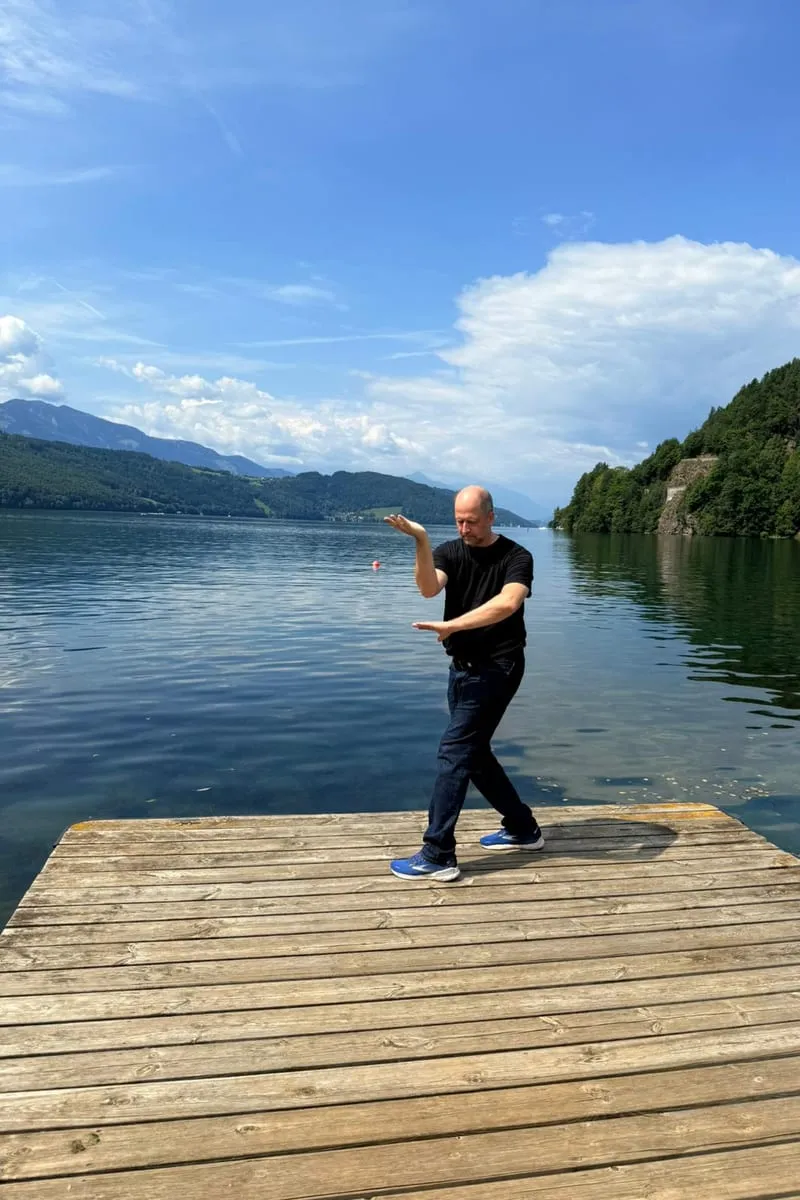
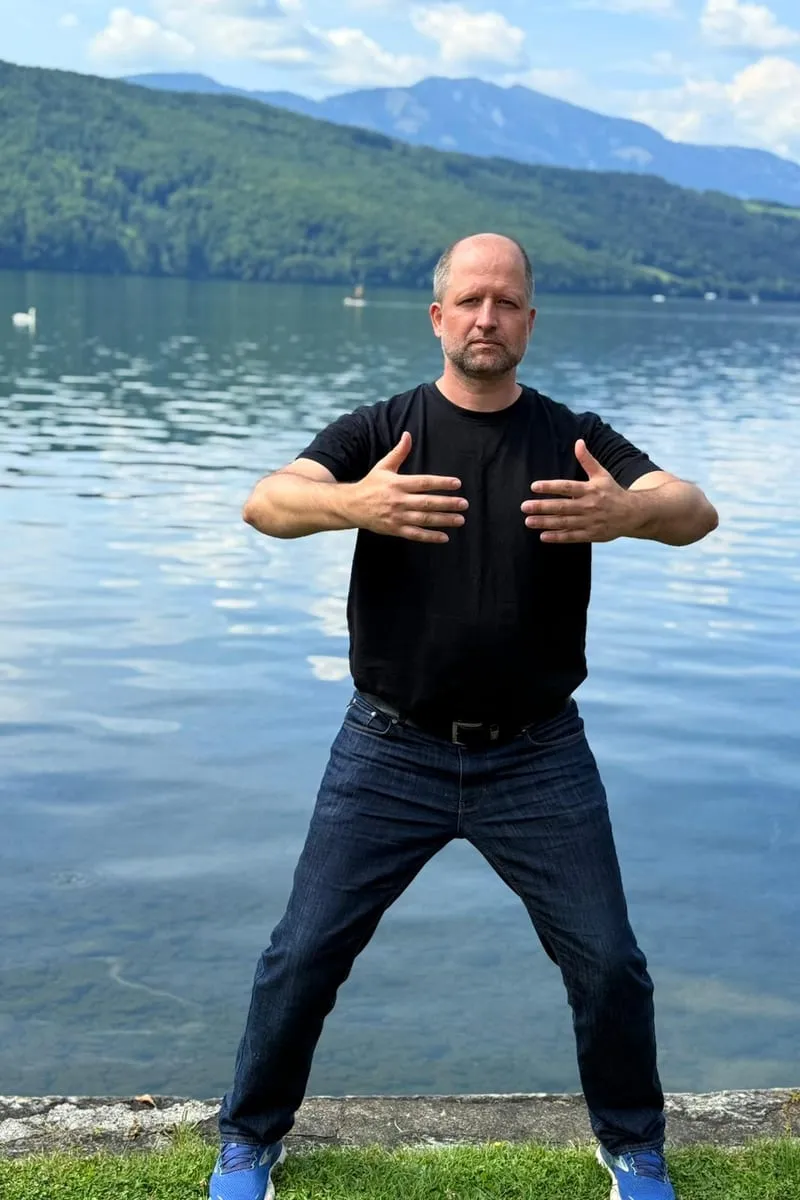
Personal practice in nature — what's learned in the dojo grows in daily life.
Schedule, location & price
When & Where?
Wednesdays 6:15pm–7:15pm
Grimmstraße 1, 80336 Munich, 3rd floor · Ludwigsvorstadt
At Theresienwiese · 2 min walk from U-Bahn Poccistraße (U6)
Format: weekly group training, 60 minutes. Language: German (English on request).
Directions & mapPrice
€69 / month · cancel monthly, no registration fee
Combo with Inner Kung Fu: €79 · All three courses: €89
Free trial class · Drop-in €25
Training atmosphere
Deliberately small groups with maximum personal attention. Respectful atmosphere, quiet concentration, genuine community. No special equipment needed – comfortable clothing, bare feet or socks.
Free live support between sessions
All students can send questions or practice videos for correction at any time. Christian replies personally.
WhatsApp Telegram Signal
Frequently Asked Questions
01 How long does it take to learn Qi Gong?
02 Can you learn Qi Gong on your own?
Yes, the basics can be picked up from books or videos. However, the real depth lies in the fine details of posture, breathing and inner perception that an experienced teacher can correct directly. In personal instruction in Munich you receive feedback on execution and pacing and can deepen the practice together with the group.
03 When should you avoid Qi Gong?
We practise Qi Gong calmly and with adjustable intensity. If you are acutely ill, recovering from surgery or unsure whether training is suitable for you, please seek medical advice first. We adapt exercises to your training level, but do not provide medical assessment.
04 Can Qi Gong provide a calm counterpoint?
Many people experience the slow forms, calm breathing and focused class as a welcome counterpoint to everyday life. Weekly training in our Munich dojo gives this practice a regular place in the week. The focus is movement and attention, not therapeutic treatment.
05 What is better, Tai Chi or Qi Gong?
It is not a question of better, but of personal preference and goal. Qi Gong often works with shorter exercises, calm breathing and inner awareness. Tai Chi (Taiji) is an inner martial art with longer, more complex movement sequences. Our Munich Qi Gong class offers a direct introduction to these principles.
06 What are the 5 Elements in Qi Gong?
The Five Phases (Wu Xing) – Wood, Fire, Earth, Metal and Water – are a traditional Chinese interpretive model. Historically they are associated with movement qualities, emotions and organs. In class they provide cultural and movement-related context; we do not derive diagnoses or effects on organs from them.