Unlike competition-oriented martial sports, our Inner Kung Fu focuses on power from inner structure and energy flow (Qi) – not from conditioning or muscle strength. No heavy breathing, no excessive sweating. You learn to use your body efficiently, regardless of build or age.
Why this in-person course is unique
Most martial arts schools focus on large groups and competition. Our course deliberately takes the opposite approach: small groups, personal guidance and genuine martial art rather than a sports programme.
What is Inner Kung Fu?
Inner Kung Fu means: power without tension. Where external Kung Fu – such as northern Shaolin or modern Wushu styles – emphasises athleticism, explosive strength and conditioning, inner Kung Fu works through body structure, breath and attention. You learn to use your body efficiently – with a clear mind, calm breath and full presence.
Three forces sit at the centre:
- Geng – deeply rooted power from structure and technique, not muscle strength
- Yi – directs this force with mental clarity and willpower
- Qi – connects everything, strengthens health and lets every movement arise from within
In training you experience this first-hand – with direct guidance and corrections from Christian.
What you'll learn
Every session combines three core aspects of Inner Kung Fu so that technique, mind and energy grow simultaneously – supported by group dynamics and immediate feedback.
功
Geng – Focused Power
Arises from skill and inner structure – not raw muscle force. Because it requires no conventional strength or endurance training, we speak of martial art rather than martial sport. Learnable by anyone, independent of physique.
意
Yi – Conscious Direction
Guides attention, willpower and Qi together – from the Dan Tian through the meridians into every subtle movement. Enables spontaneous, precise responses without external tension.
氣
Qi – Cultivating Life Energy
As in Qi Gong, Qi is consciously gathered to strengthen life energy, nourish organs and fascia and activate the body's natural self-healing powers. Health from the inside out.
Further core competencies
- Self-defence without rules or weight classes (safe, guided partner exercises)
- Powerful close-range strikes – effective without a windup
- Movement from the centre: core rather than arms
- Mind leads movement: your will guides, the body follows
Who is this group course for?
- Kung Fu enthusiasts: You love martial arts and want to discover the essence behind the films.
- Returning students: You trained martial arts before and want to restart – without strength training and endurance stress.
- Curious movement lovers: You seek a genuine martial art that cultivates inner calm beyond mere fitness routines.
- People beyond show & bodybuilding: You are interested in the art itself, which strengthens your mind and sets your life energy in motion.
Tip: As a complement I also offer Qi Gong & Wuji Quan – the course runs right before this one (Wednesdays 6:15–7:15 pm).
Course contents in detail
Wuzu Quan – The Five Ancestors
Wuzu Quan (五祖拳, "Fist of the Five Ancestors") originated in the southern Chinese province of Fujian and is considered one of the most influential styles of southern Shaolin. In the course Wuzu Quan forms the heart of our curriculum – five masters each hold a key to the complete martial art:
The Monkey
Makes you agile, unpredictable and lightning-fast – constantly changing angles confuse the opponent and open gaps.
The White Crane
Explosive speed without muscular tension – pure structure combined with the whip principle for maximum effect.
The Emperor (Tai Zu)
Penetrates every defence and controls the opponent's centre like a chess master commands the board.
Bodhidharma (Damo)
Back to the source: breathing, meditation and long-term health form the inner pillar of power.
The Lohan Monk
Unshakeable stability – physically and mentally. Rooted like a rock, never giving ground.
Wuzu Quan is the style from which Okinawan Karate evolved. For all Cobra Kai and Karate Kid fans: this is the original – experience it live in Munich!
Going deeper: guide article on Wuzu & Taizu Quan – the southern/northern distance system, the set-up strategy, and the "a block is a punch" logic.
Complementary principles
- Vee Arnis Jiu Jitsu – stick fighting, knife combat, proven on the streets of New York.
- UCC – Ultimate Close Combat – effective self-defence from Hamburg.
- Fairbairn – the mind is the final weapon.
- Wuji Quan – complete emptiness: so soft that every attack leads into nothing.
- Xing Yi & Yi Quan – sharpen inner will; every movement becomes clear and purposeful.
- Bagua Zhang – flowing, circular footwork; movement as though there are no separate joints.
- Systema, Hakka & Wing Chun – Short Power: explosive force in the tightest space.
- Jeet Kune Do – teaches you to question and adapt every technique.
- Taiji Quan – the power of rotation.
- Baji Quan – explosive elbow and shoulder techniques with a rooted stance.
- Tongbei Quan & Pigua Zhang – whip-like force from the back.
Health benefits
Many participants report after a short time:
- A relaxed lower back thanks to natural spinal alignment
- Deeper sleep through an activated parasympathetic nervous system
- Stable knees and shoulders guided from the body's centre
- Calmer reactions in conflict situations
Self-defence
To teach realistic self-defence, we supplement Kung Fu training with proven principles and techniques from Vee Arnis Jitsu as taught by Professor David James, Fairbairn, UCC – Ultimate Close Combat, HEMA, and Jeet Kune Do.
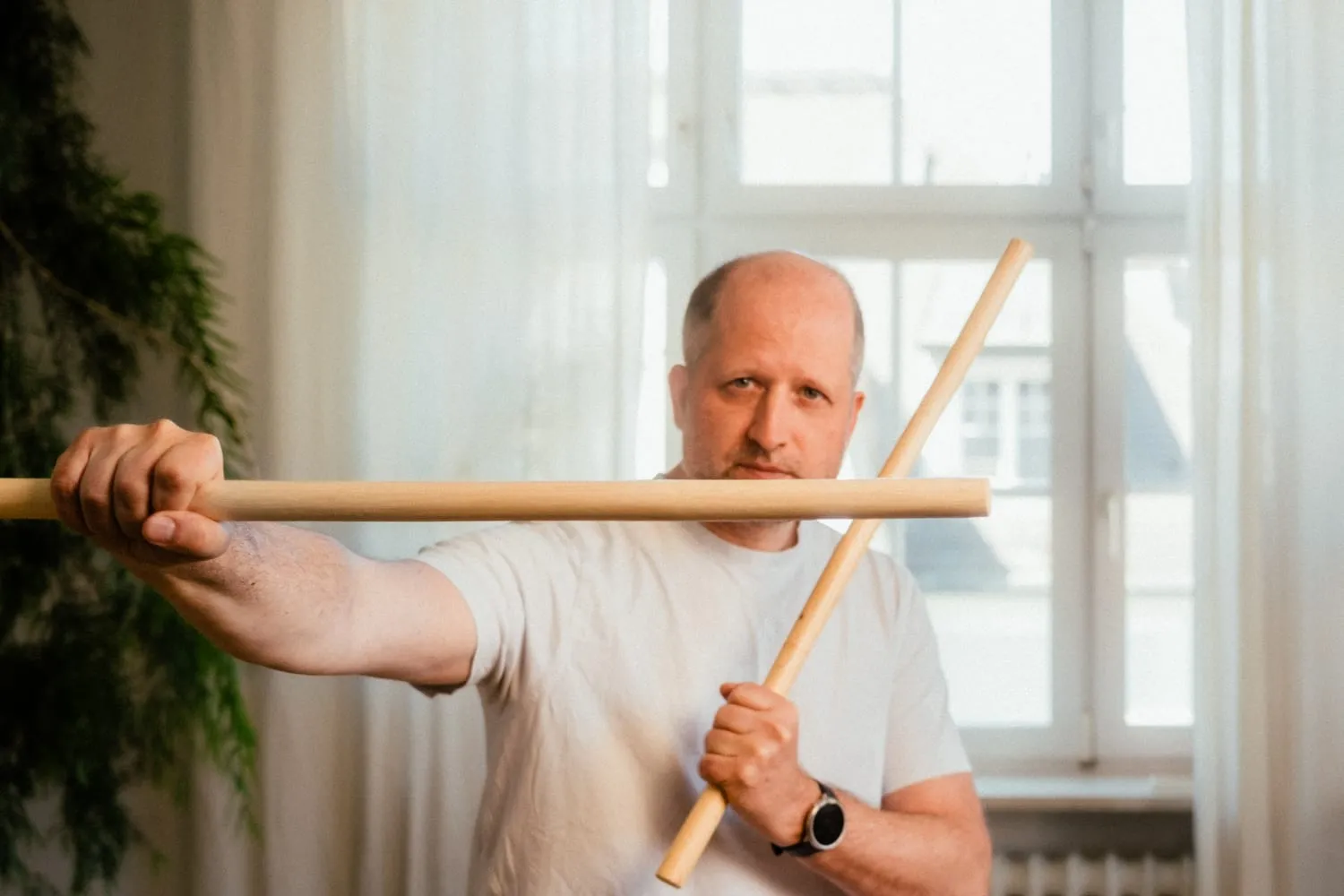
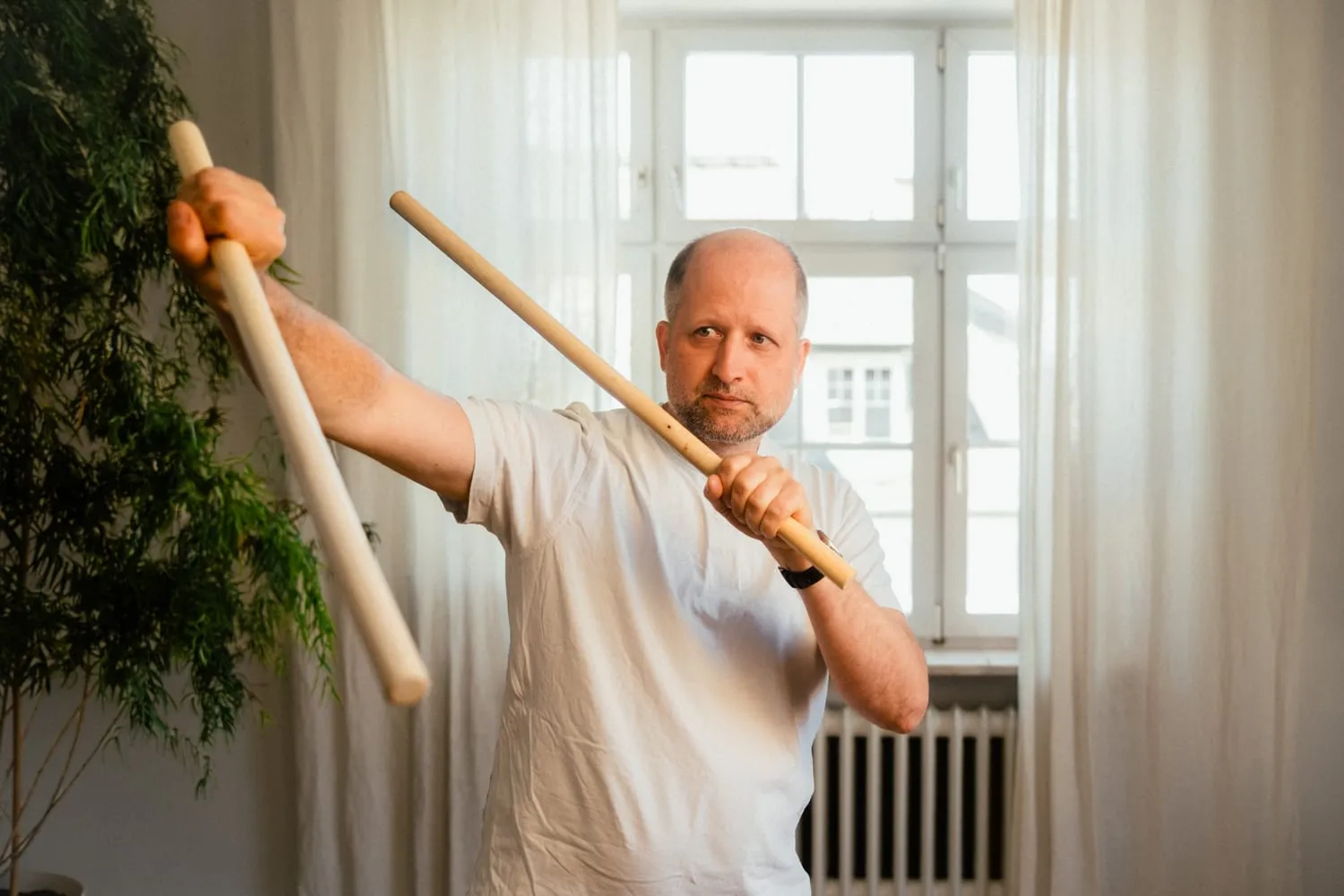
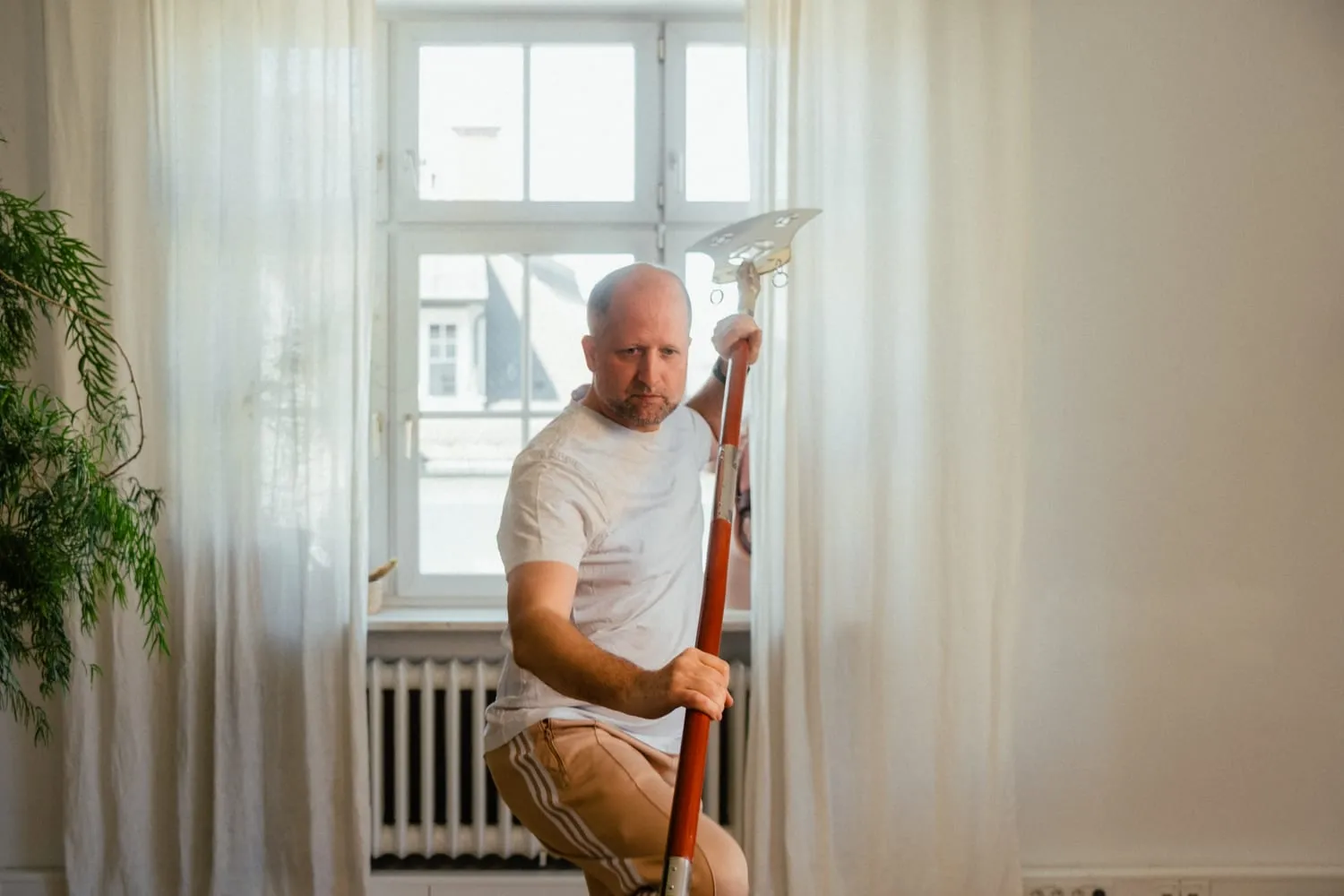
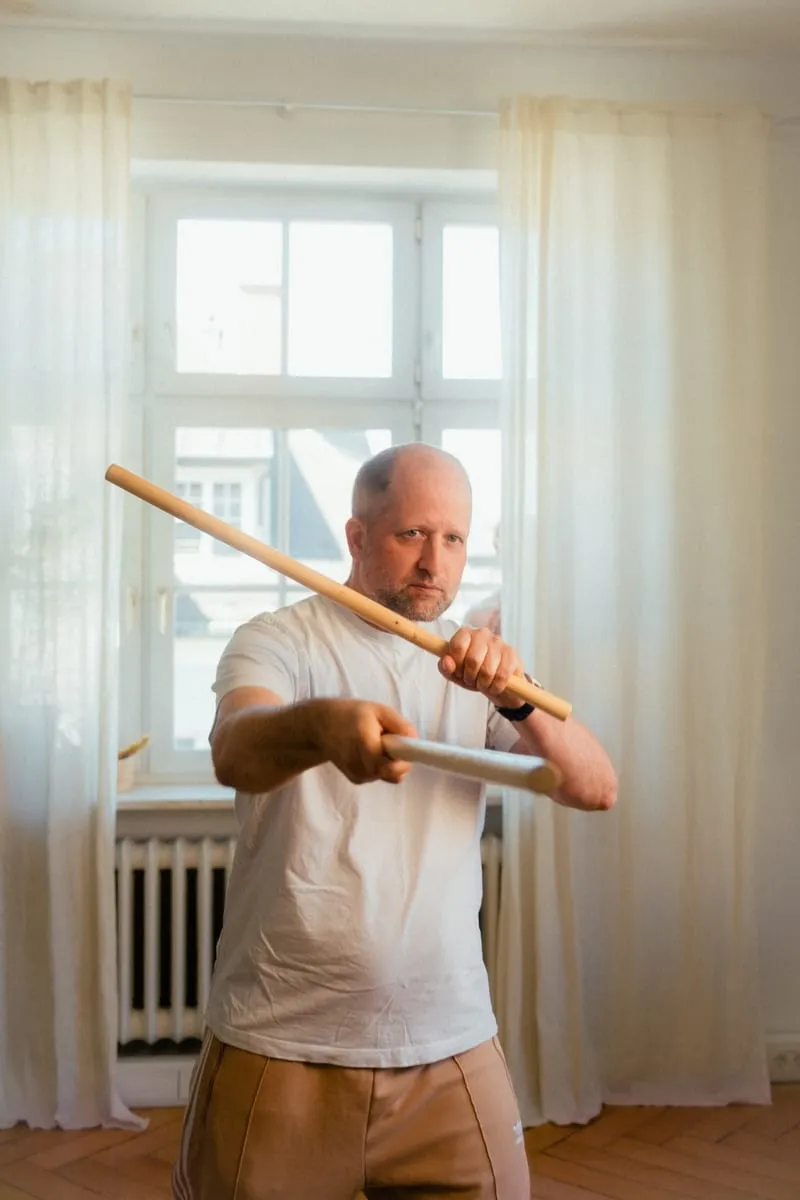
Training includes work with and without weapons: stick, knife, improvised objects, distance, timing, and clear action under pressure.
Schedule, location & price
When & Where?
Wednesdays 7:15pm–8:15pm
Also: UCC practice group by request (Ultimate Close Combat self-defence)
Grimmstraße 1, 80336 Munich, 3rd floor · Ludwigsvorstadt
At Theresienwiese · 2 min walk from U-Bahn Poccistraße (U6)
Price
€69 / month · cancel monthly, no registration fee
Combo with Qi Gong: €79 · All three courses: €89
Free trial class · Drop-in €25
Training atmosphere
Maximum 8 participants. Respectful, focused, genuine community. No special clothing required – clean indoor shoes or bare feet.
Free live support between sessions
All students can send questions or practice videos for correction at any time. Christian replies personally.
WhatsApp Telegram Signal
Frequently Asked Questions
01 How does Inner Kung Fu differ from Karate or Wing Chun?
02 Will I learn practical self-defence?
Yes. Applicable self-defence without rules or weight classes is a core part of the training. In safe, guided partner exercises you develop powerful close-range strikes and learn to respond spontaneously to attacks.
03 How large are the training groups?
Training is intentionally kept in small, focused groups of up to 8 participants. This ensures everyone receives direct feedback and individual corrections – something rarely possible in large schools.
04 Do I need to be athletic or strong to start?
Not at all. One of the greatest advantages of Inner Kung Fu is that it does not depend on athletic prerequisites. You learn to generate power from body structure, breathing and mental alignment. Ideal for people of all ages and constitutions.
05 How safe is the training?
Because we work without hard sparring, jumps or overstretching, the risk is very low. Micro-movements protect joints, and the focus on breath prevents overexertion.
06 Where does Wuzu Quan come from – and how does it relate to Karate?
Wuzu Quan originated in the southern Chinese province of Fujian and is one of the precursors to Okinawan Karate. Over centuries its principles migrated to Okinawa and shaped styles such as Goju-Ryu. Learning Wuzu Quan means training one of the original roots of Asian martial art.
07 How long does it take to see first progress?
Most participants report noticeably better body awareness, calmer breath and more stable posture after four to six sessions. Because Inner Kung Fu does not rely on building strength, there are no plateau phases like in weight training – progress keeps going finer and deeper.